
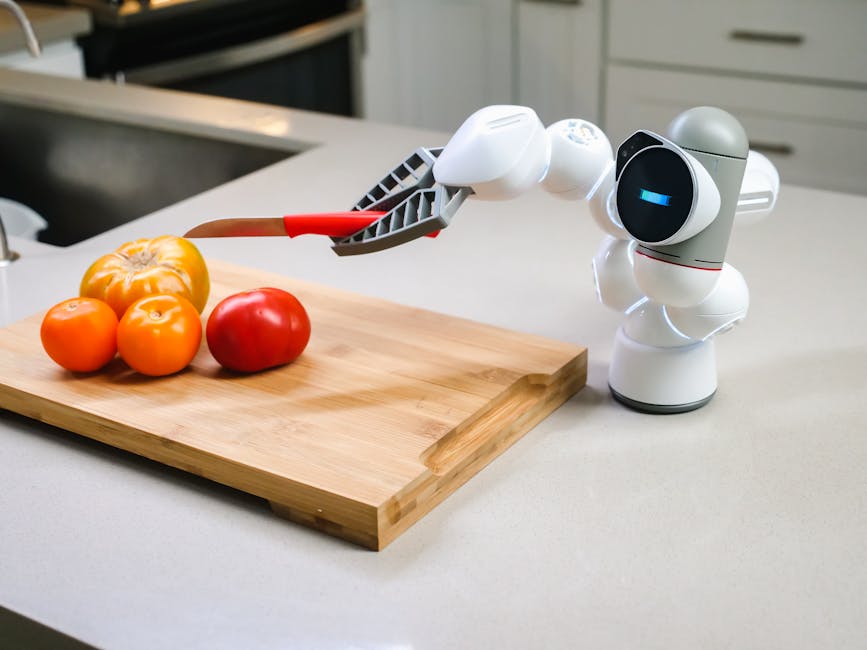
Welcome to the definitive guide on navigating the technological landscape of the future.
As we move further into 2026, the convergence of Artificial Intelligence (AI) and hyper-automation has transformed from a competitive advantage into a fundamental necessity for businesses and individual creators alike. This guide explores the most significant advancements and provides a roadmap for staying ahead in an era of rapid digital transformation.
Overview: The State of AI and Automation in 2026
The current year marks a pivotal shift from « Generative AI » to « Agentic AI. » Unlike the large language models of the past that simply generated text or images, today’s AI agents are capable of autonomous reasoning, multi-step planning, and executing complex workflows across various software ecosystems without human intervention.
Furthermore, the democratization of automation tools has reached a peak. Low-code and no-code platforms integrated with neural networks allow users to build custom internal tools in minutes. We are seeing a massive trend toward « Personal Productivity Stacks, » where individuals deploy localized AI models to manage their data securely, reducing reliance on centralized cloud providers while maximizing processing speed.
📌 Related to this topic:
Key Strategies for Success
To thrive in this environment, it is no longer enough to simply use AI; you must integrate it deeply into your strategic framework. Here are the core strategies currently being utilized by industry leaders:
- Implementing Agentic Workflows: Move beyond simple prompt-response interactions. Shift toward setting goals for AI agents that can browse the web, interact with APIs, and compile comprehensive reports autonomously.
- Data Sovereignty and Local LLMs: With the rise of specialized small language models (SLMs), businesses are now hosting their own AI locally to ensure maximum data privacy and security, moving away from public-facing models for sensitive operations.
- Hyper-Personalized Customer Journeys: Use automation to synthesize customer data in real-time, providing tailored experiences that adapt to user behavior instantaneously across web and mobile platforms.
- Cognitive Offloading: Automate administrative tasks—such as scheduling, transcription, and basic coding—to free up human capital for creative problem-solving and high-level strategic thinking.
Practical Tips for Implementation
Transitioning to an automated workflow can be daunting. Follow these actionable tips to ensure a smooth integration:
First, perform an Audit of Repetition. Identify any task you perform more than three times a week that involves digital data; these are the primary candidates for automation. Second, prioritize Interoperability. When choosing new software, ensure it has a robust API or native integration with automation hubs like Zapier, Make, or custom-built Python scripts.
Third, maintain a Human-in-the-Loop (HITL) system. While AI is powerful, it still requires oversight to prevent hallucinations and ensure brand alignment. Establish a verification step for any AI-generated output that is client-facing. Finally, stay updated on Ethical Compliance. As regulations around AI evolve, ensure your tools are transparent and follow the latest data protection laws in your jurisdiction.
Conclusion
The pace of innovation shows no signs of slowing down. The gap between those who leverage automation and those who do not is widening every day. By adopting an AI-first mindset and staying curious about emerging tools, you position yourself at the forefront of the modern economy. Start now. The future belongs to those who automate.
📌 Found this helpful? Pin it for later!
Save this comprehensive guide to your Pinterest board so you never lose these essential AI and automation strategies.
